She builds her agents the same way she builds patterns:
as precise systems with clear inputs and outputs.
Each agent is a program she runs on her own machines.
One handles pattern variation under defined constraints.
Another translates geometry into machine instructions.
Another checks fit against measurement data. Each one is small, explicit, and composable.
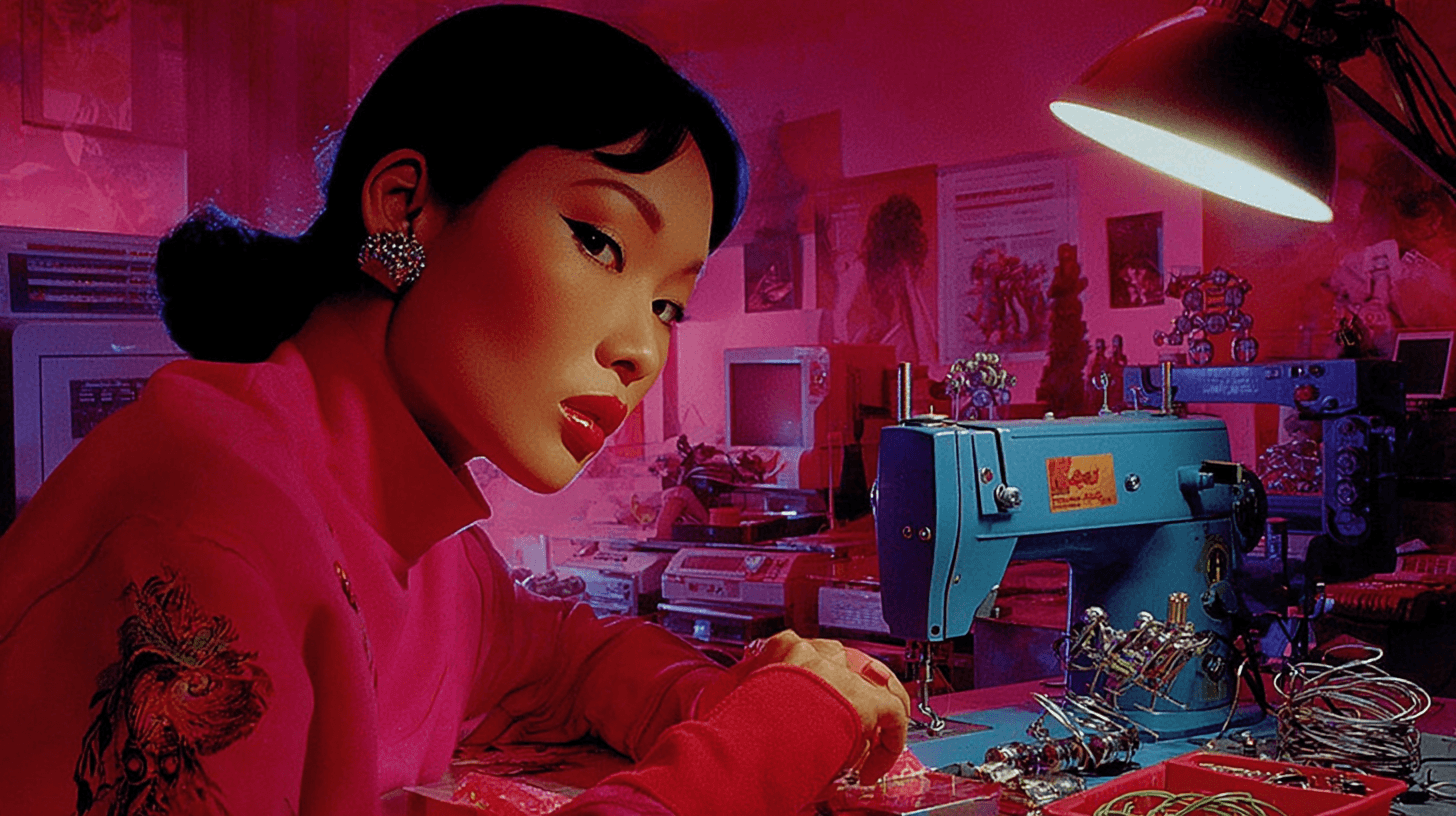
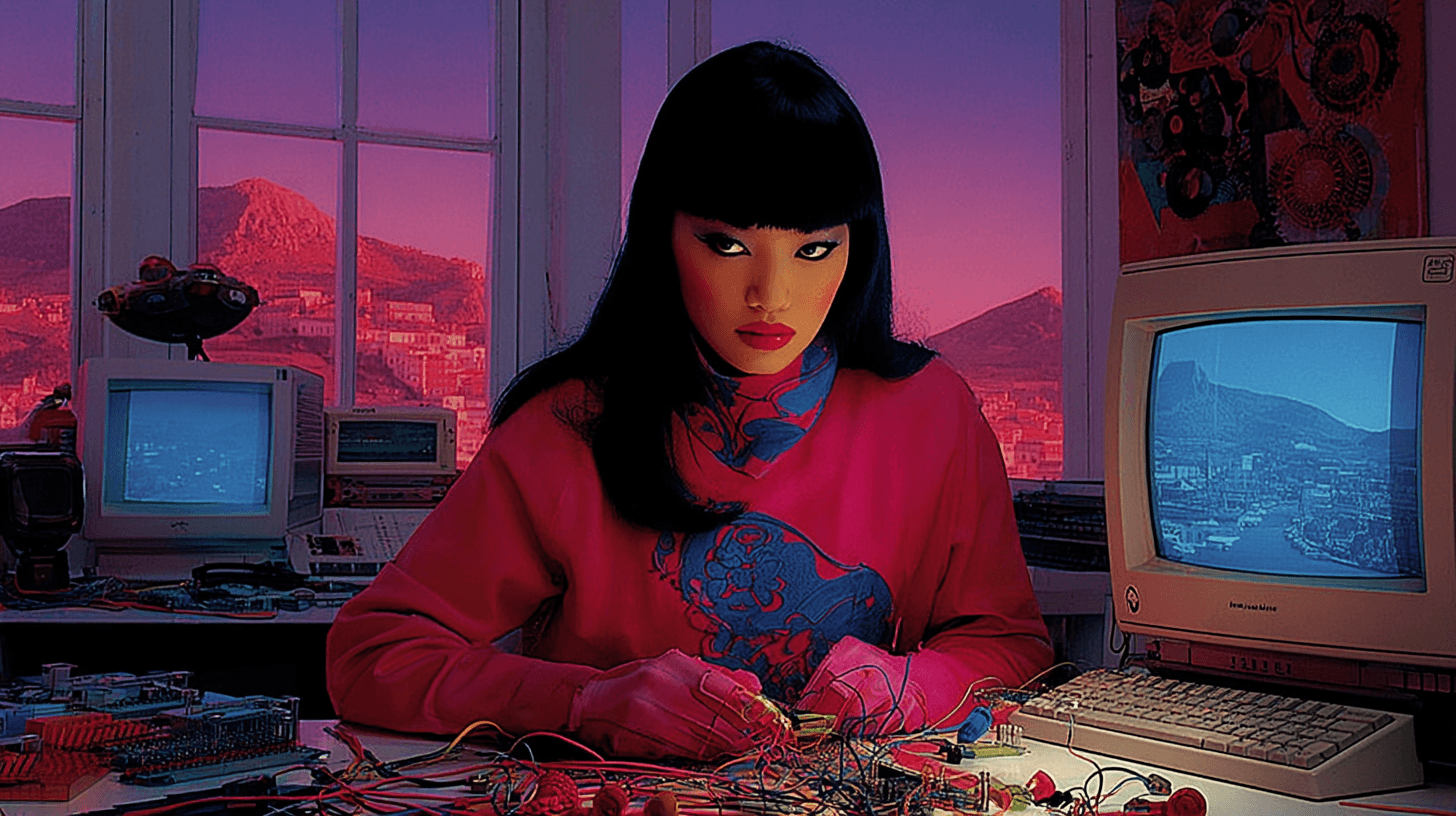
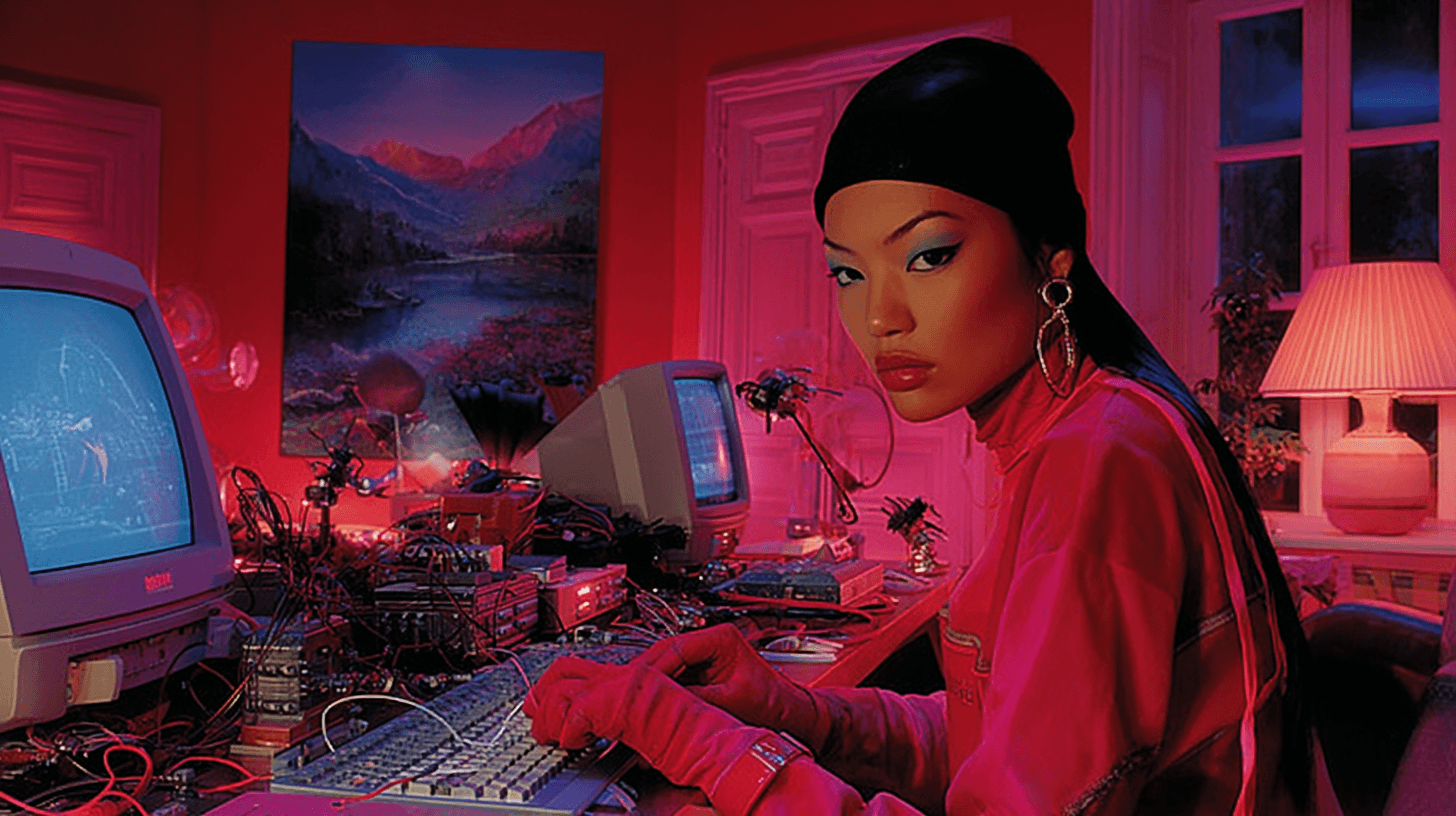
These agents sit on her hardware. Local compute boxes, open boards, storage. The model weights, the datasets, the prompt structures, the memory states—all reside there. Nothing is routed outward by default. When an agent runs, it reads from the commons layer or from a confidential input channel, performs its transformation, and produces a result. The path is contained.
DIGITALAX
CC0 WEB3 FASHION
She keeps a strict split in what each agent can access.
Agents that operate on CC0 pattern data read only from the open substrate. They ingest pattern files, garment scans, weave instructions. They produce new pattern states. Those outputs can be published immediately or held back. The agent never touches private data.
Agents that operate on buyer-specific inputs run inside a bounded environment. They receive encrypted measurements, decode them inside that environment, generate adjusted patterns, and output only what is needed for fabrication. The raw input does not move beyond that execution surface. The agent completes its function and releases the result.
She then arranges these agents into workflows.
A pattern enters from the commons.
A variation agent produces new candidates.
A selection step filters them.
A compilation agent converts the chosen state into machine instructions.
A fabrication agent routes those instructions to a cutter or loom.
This sequence runs entirely on her machines or on nodes she trusts inside the co-op. Tokens move alongside this sequence to trigger each step. The agents do not decide when to run. They execute when the correct inputs and tokens arrive.
When she works inside a microfactory co-op, her agents remain hers. She brings them into the space as executable units. The co-op provides machines and shared nodes. Her agents connect to those nodes through defined interfaces. A fabrication agent sends instructions to a loom node. A validation agent checks outputs coming back. The agents do not merge into a shared system. They remain distinct programs participating in a shared environment.
This allows her to coordinate across multiple identities.
She can run one set of agents under one key, producing outputs tied to a specific thread of work. She can run another set under a different key, exploring a separate direction. She can reuse the same underlying models while presenting different surfaces externally.
The agents carry the continuity of her process. The keys determine where that process is anchored.
Because everything runs locally or within bounded nodes, she can shift identities without migrating data or workflows. The agents remain in place. The data remains in place. Only the signatures change. A new key can start anchoring outputs immediately, drawing from the same underlying system.
Her decentralized storefront becomes a thin layer over this.
It presents pattern states from the commons, garment references from her production runs, and entry points for interaction. When a buyer engages, the storefront routes them into her workflows. Tokens enter, encrypted data enters, agents run, outputs are produced. The storefront does not hold the logic. It exposes it.
This structure gives her a different kind of autonomy.
Her creative process is not tied to a platform’s model or dataset.
Her agents evolve with her own data and constraints.
Her machines execute instructions she can inspect and modify.
Her private interactions remain inside her own computation surfaces.
Her public outputs circulate freely in the commons.
Everything she builds can be recombined, extended, or paused without breaking the system.
Over time, her agents become more refined. Not because they absorb everything indiscriminately, but because she adjusts their structure—what they read, how they transform, where they output. The improvement is in the workflow, not in a hidden feedback loop.
This is what allows her to move fluidly.
She can expand into new pattern spaces by adjusting her generative agents.
She can enter a co-op, connect her agents to its machines, and produce immediately.
She can leave that space and continue working with the same system elsewhere.
She can publish openly or keep certain outputs private.
Her practice is carried by the agents and the flows they participate in. The surrounding layers—commons, confidential channels, tokens, machines—remain stable.